
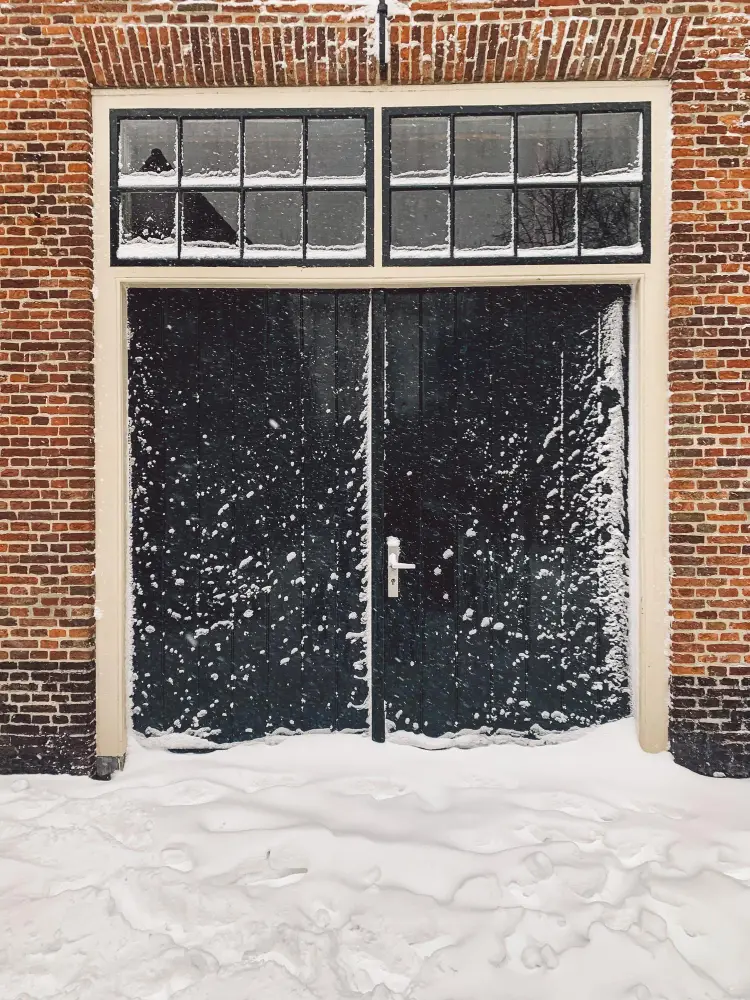
Garage doors that ran fine all summer start acting up the moment temperatures drop. The opener strains. The springs creak. The door grinds against the track. The opener stops working after sitting overnight at minus fifteen. None of this is bad luck. Garage door winter problems run on predictable patterns, and most of those patterns show up between November and March.
This piece breaks down what actually happens to a garage door in winter, why those failures are common, and how to keep most of them from happening to you.
Metal Contracts in the Cold
Steel components shrink in cold weather. The shrinkage is small, fractions of a millimetre, but it adds up across the length of a garage door.
Track Alignment Shifts
The tracks the rollers ride in are mounted to the wall with brackets. When the steel cools, those brackets shift slightly, and the track alignment changes. A door that ran smoothly in July starts catching, grinding, or pulling to one side in January.
Spring Tension Changes
Torsion springs lose a small amount of tension when they’re cold. For a door that was already running on tired springs, the loss might be enough to keep the opener from lifting the door at all. Some homeowners find their door won’t open in the morning but works fine by afternoon once the garage warms up.
Hinge & Roller Bushings
Bushings and bearings tighten up in the cold. Rollers that turned smoothly in summer don’t turn as freely in winter. The opener has to work harder to move the same door, and over time the strain shows up as a burnt-out motor.
Lubricant Thickens in the Cold
Most garage door lubricants work in a temperature range. Outside that range, they get sticky, gummy, or stop flowing at all.
Wrong Lubricant Choice
WD-40 isn’t a lubricant; it’s a degreaser. People use it on garage doors thinking it helps, and in summer it doesn’t cause much trouble. In winter, it dries out the bearings and leaves rollers running dry on cold metal.
The right product is a silicone-based or lithium-based spray lubricant designed for garage doors. These hold up across the temperature range and don’t thicken into paste at minus ten.
Re-Lubrication Timing
A winter lubrication in October or early November sets up the door for the cold months. Hitting the hinges, rollers, and spring with the right product once before the first hard freeze prevents most cold-weather drag issues.
Spring Failures Spike in Winter
Torsion springs have a finite life. Each cycle (one open and one close) takes a small amount of their remaining life. Standard springs are rated for around ten thousand cycles. Cold weather doesn’t shorten the life of the spring directly, but it does increase the chance that an already-aged spring snaps.
Sudden Loads on Cold Springs
A cold spring is less elastic. When the opener pulls the door up, the spring has to release stored energy quickly. On a near-end-of-life spring, that sudden load is the straw that breaks it.
Most garage door spring failures happen in winter for exactly this reason. The spring was on borrowed time, and the cold pushed it past the line.
Listening for Warning Signs
Before a spring snaps, you’ll often hear a creak, a groan, or a popping sound when the door operates. If you hear that in the fall, get a tech out before December. Replacing a spring proactively costs the same as replacing it after it breaks, but doing it on a scheduled visit beats doing it in a snowstorm.
Ice & Snow Buildup
A garage door sits at ground level. Snow, slush, and ice accumulate at the bottom of the door and freeze it to the floor.
Frozen to the Slab
When the bottom of the door freezes to the concrete slab below, the opener can’t lift it. Forcing the opener to try will burn out the motor or snap a cable.
The fix is to break the ice loose by hand before pressing the button. A flat shovel or a hot water pour usually works.
Weather Seal Damage
The rubber seal along the bottom of the door cracks in cold weather. Once it cracks, water gets behind it, freezes, and tears it further. By spring, the seal is in pieces and the door no longer keeps weather out.
Replacing the seal in fall before the cold sets in prevents this. A torn seal in January is hard to replace because the adhesive needs warmth to bond.
Opener & Sensor Issues in the Cold
Garage door openers and their accessories don’t love the cold.
Remote Batteries Fail Faster
Cold drains batteries in remotes and keypads quickly. A remote that worked fine in October won’t reach the opener in January until the battery is replaced.
Photo-Eye Sensors
The sensors near the floor get covered in snow, frost, or ice. Once the beam is blocked, the door won’t close. Wiping the sensors clean each morning during winter takes ten seconds and prevents the most common winter callback.
Opener Motors
Older opener motors struggle in extreme cold. The lubricant in the motor thickens, the gears bind, and the unit either runs slowly or doesn’t run at all. A motor that’s borderline in November will fail outright in January.
Cable & Track Damage
Steel cables and tracks both react to cold.
Frozen Tracks
A track that’s bent slightly because of summer heat returns to shape in winter, but if water has frozen inside the track or on the rollers, the door grinds and binds. Clearing ice and snow from the track once a week through winter keeps this in check.
Cable Stress
Cables that have been fraying through the year may not survive a hard cold snap. The brittleness of cold steel combined with existing fray points causes snaps. Inspecting cables visually in late fall and replacing any with visible fray prevents winter cable failures.
Preventing Winter Failures
Most cold-weather garage door issues can be slowed down or stopped with about an hour of preparation in October or early November.
- Lubricate hinges, rollers, and springs with a winter-rated product
- Replace remote batteries
- Wipe sensor lenses and check alignment
- Inspect the weather seal and replace if cracked
- Check cables visually for fray
- Listen to the door through a full cycle and note any new noises
- Schedule a tune-up if anything sounds off
A garage door that gets that level of attention in fall usually rolls through winter without complaint. A garage door that gets ignored often makes its complaint loudly, around 6 AM, in the middle of a snowstorm.